
Leak Testing Instruments
Differential and gauge pressure testing
The differential pressure method is particularly well-suited for high measurement accuracy and low leak rates. The relative pressure method allows for a simple test setup and fast test cycles with higher permissible leak rates.
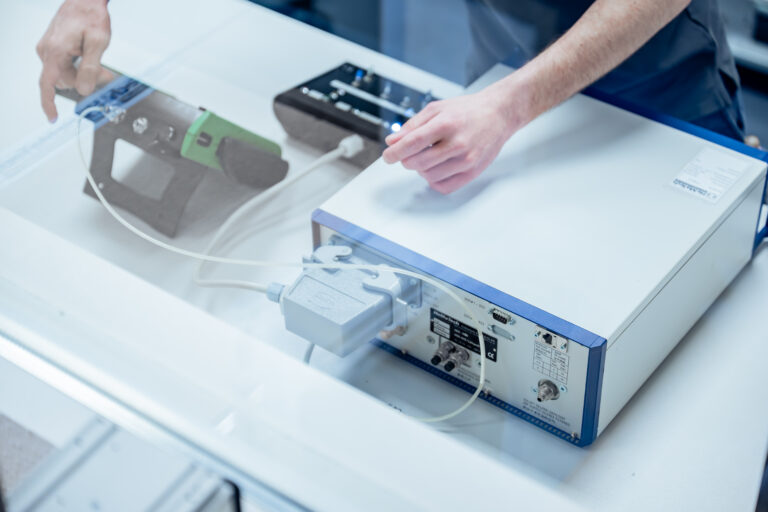
Leak Testers for Various Testing Requirements
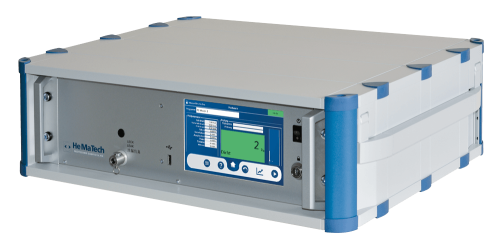
70PRO Leak Tester
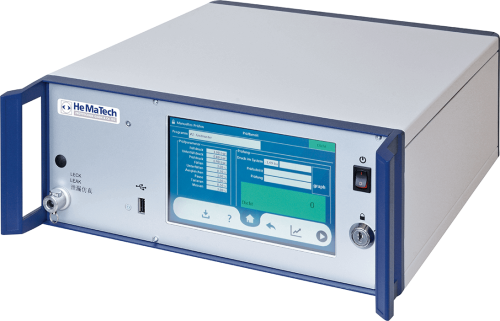
71REL Leak Tester
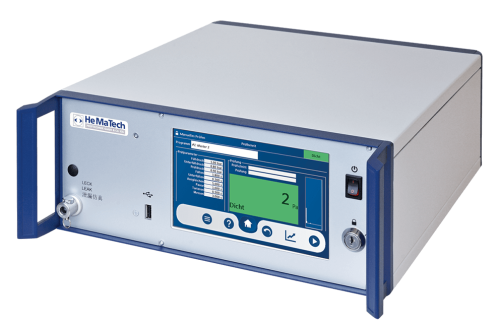
75ECO Leak Tester
Videos on leak testers
Operation
Performing a measurement
Setting up test programs
Mass Production and Laboratory Applications
Technical Features
Many devices can also be customized to meet specific testing requirements.
The content helps users better understand testing procedures and quickly familiarize themselves with device functions.
get in touch
Frequently Asked Questions About Our Services
What test methods are used for leak testing?
Depending on the component and requirements, different methods are used. We frequently employ differential pressure testing, relative pressure testing, or flow measurement. The appropriate method depends on factors such as leak rate, component geometry, test medium, cycle time, and environmental conditions. We also develop customized test concepts for specialized applications.
For which products are leak testers suitable?
Leak testing equipment is used in many industrial sectors. Typical applications include housings, valves, piping systems, plastic parts, die-cast parts, battery modules, and fluid-carrying components. It is crucial that leaks can be reliably detected and documented.
Can testing equipment be integrated into existing production lines?
Yes. Our testing devices and testing systems are designed to integrate into existing manufacturing processes. In doing so, we take into account interfaces, control technology, data communication, cycle times, and existing automation systems.
What is the difference between a test device and a test system?
A testing device performs the actual measurement or leak test. A testing system links several technical processes together, such as handling, feeding, the testing sequence, data acquisition, and the removal of defective components. Testing systems are usually fully integrated into production lines.
Why is a calibration laboratory important for testing technology?
Measurement systems change over time due to stress, use, or environmental factors. Regular calibrations ensure that testing equipment continues to deliver reproducible results. This maintains consistent quality assurance and prevents inaccurate measurements.
What are the advantages of automated testing systems?
Automated testing systems reduce the need for manual intervention and ensure consistent testing conditions for high-volume production. At the same time, they allow testing data to be documented, processes to be monitored, and defects to be detected more quickly. This improves process reliability and supports stable mass production.
Can customized solutions be implemented?
Yes. Many applications require specialized test procedures or specific mechanical requirements. That is why, in addition to standard solutions, we also develop custom test systems, special-purpose machines, and customized leak-test systems for complex components and production processes.
What role does flow measurement play in testing technology?
Flow measurement is used to test flow behavior, leak rates, or the operational parameters of components. It is an important part of modern testing technology, particularly for fluid-carrying components, and effectively complements traditional leak testing methods.