
Our Leak Testers
Leak detection equipment for industrial leak testing
Ourleak testers are suitable for industrial applications in mass production as well as for test benches and laboratory applications. Depending on the task, the devices can be used stand-alone or integrated into automated test systems and existing production processes.
Are you looking for the right leak tester for your application? We’ll help you make the right technical selection.
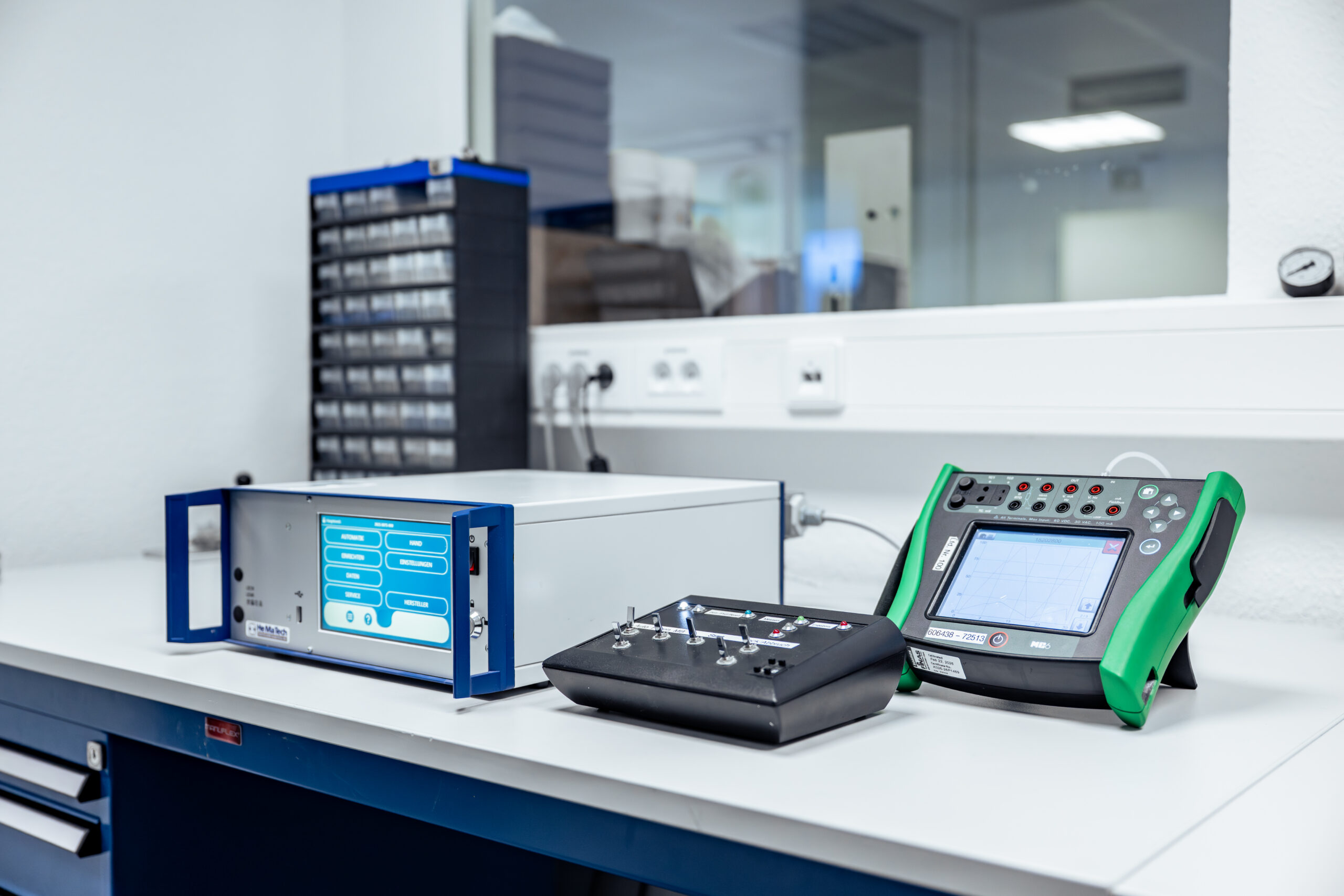
Leak Testers for Various Testing Requirements
HeMaTech therefore offers a variety of leak testers for different industrial testing tasks. With the 70PRO, 75ECO, and 71REL, three models are available that meet a range of requirements regarding measurement methods, accuracy, and application.
The 70PRO leak tester is designed for demanding leak tests with high requirements for measurement accuracy and flexibility. It operates using the differential pressure method and offers a wide range of customization and expansion options.
This makes the 70PRO particularly well-suited for more complex testing tasks as well as for applications where small leaks must be reliably detected and various testing requirements must be met using a high-performance system.
The tester can be used as a standalone unit or integrated into test benches and automated production lines.
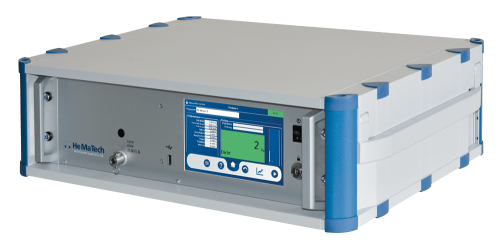
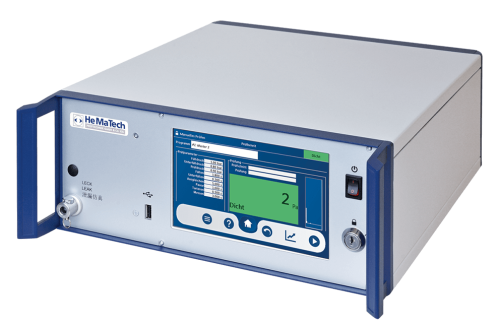
The 75ECO leak tester is a compact solution for many standard industrial applications. The device operates using the differential pressure method and combines good measurement accuracy with a design tailored to typical testing tasks.
This makes the 75ECO particularly attractive when a cost-effective leak tester is needed for recurring testing processes and the extensive configuration options of the 70PRO are not required.
The device is suitable for both individual test stations and integration into industrial testing processes.
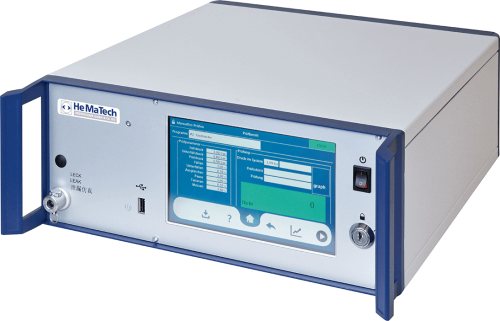
The 71REL leak tester operates using the relative pressure method. This method measures the pressure change within the test specimen and uses it to evaluate leak tightness.
Compared to differential pressure testing, the relative pressure method allows for a simpler test setup. The method is less sensitive but covers a wider measurement range and is particularly suitable for applications with higher permissible leak rates.
The 71REL can also be integrated into automated manufacturing processes, making it suitable for both standalone testing tasks and integrated solutions.
Leak Test Using Differential Pressure or Relative Pressure
The appropriate method depends primarily on the permissible leakage rate and the conditions of the specific application.
The HeMaTech documentation distinguishes, among other things, between pressure change measurements using relative/absolute pressure transducers and the differential pressure method.
In differential pressure leak testing, both the test specimen and the reference volume are pressurized. The relative change in pressure between the two volumes is then measured.
The comparison with a reference volume enables high measurement resolution. This method is therefore particularly useful for industrial applications where small leaks must be detected and reproducible quality assessments must be made.
The 70PRO and 75ECO utilize this testing principle.
In a relative pressure test, the change in pressure is measured within a sealed test volume. Unlike the differential pressure method, no additional reference volume is required for the actual comparison measurement.
This method thus allows for a simpler test setup and is particularly suitable for applications where larger leaks are permissible.
The 71REL is the corresponding HeMaTech tester for relative pressure testing.
Which leak tester is right for your application?
In particular, the required test procedure and the permissible leak rate are important selection criteria.
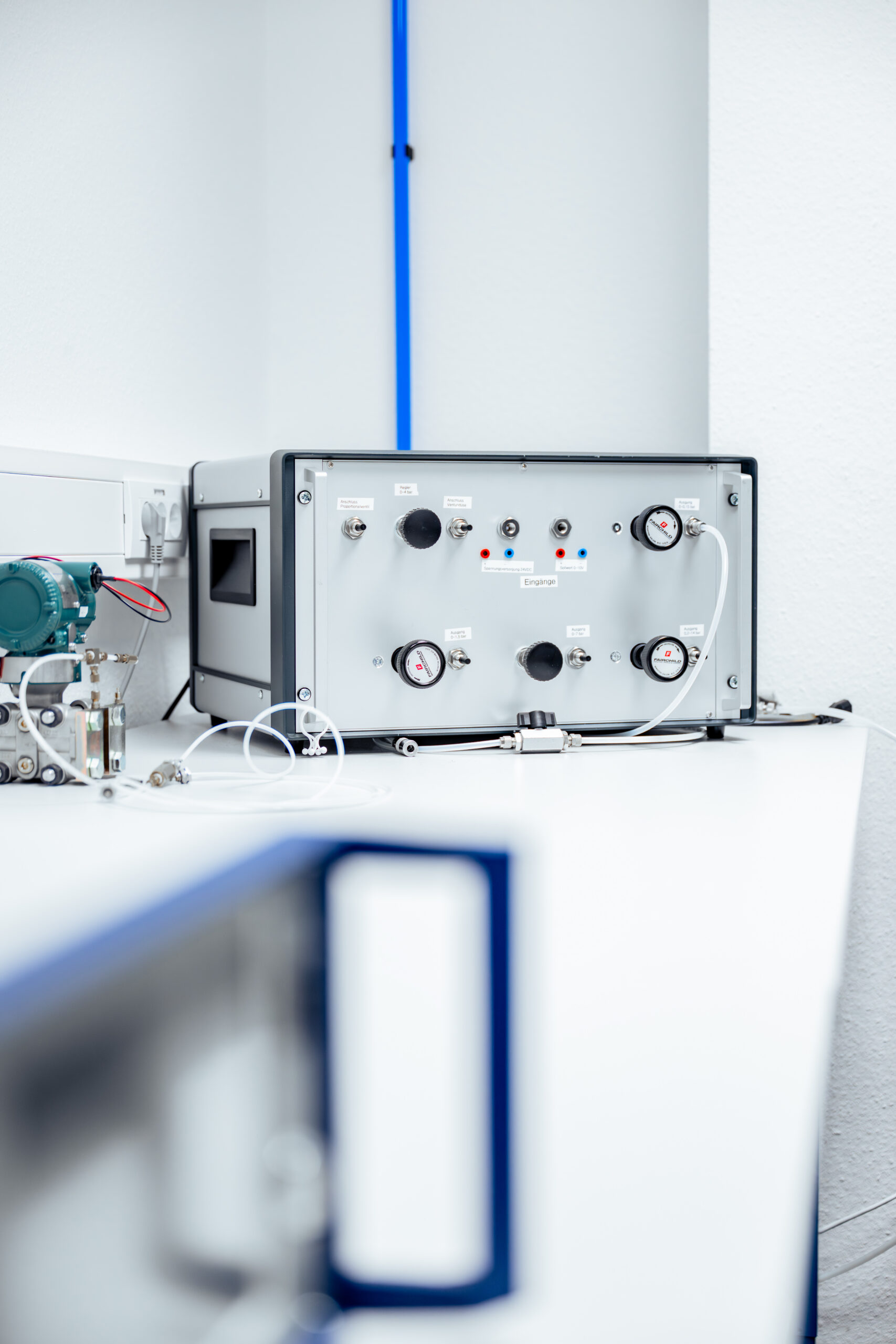
Leak Testers for Mass Production, Test Benches, and Laboratories
HeMaTech testing technology is used in the following areas, among others:
However, “tight” is not a universally applicable measurement parameter. What matters is what level of leakage is permissible for the specific component under its intended operating conditions. Test pressure and permissible leakage are therefore essential factors in designing a leak test.
Integrating Leak Testers into Production Lines
For example, automatic test sequences, data interfaces, limit value monitoring, test logging, and communication with higher-level control systems can be integrated into the test process. The available HeMaTech documentation also lists statistical and reporting functions, as well as support for traceability, as possible features.
For more extensive automation tasks, HeMaTech develops complete leak testing systems. These can combine measurement technology, fixtures, workpiece handling, control systems, and data evaluation into a coordinated, integrated system.

Choosing the Right Leak Tester
Before making a selection, the following points in particular should be clarified:
The geometry and volume of the test specimen influence the test process and the required test times.
Permissible Leak Rate
What is the maximumpermissibleleakage under defined test conditions? The permissible leakagerateis one of the most important criteria when selecting a test method.
Test Pressure
The test pressure should be determined based on the application and subsequent operating conditions.
Cycle Time
In mass production, the leak test must fit into the existing production process.
Measurement Accuracy
The test should be designed to be as accurate as necessary to provide a reliable assessment of quality.
Degree of Automation
In addition to stand-alone units, integration into fixtures, test benches, or fully automated leak testing systems may be advisable.
Leak Testing Using the Right Testing Technology
HeMaTech develops and manufactures testers as well as corresponding fixtures and machines at its facility in Schwaikheim near Stuttgart. Our services also include consulting to help you implement specific testing requirements.
Describe your testing task to us. Together, we’ll examine the component, test pressure, permissible leak rate, cycle time, and production environment to select a technically and economically suitable solution for your leak test.
Request a Leak Tester
HeMaTech combines industrial testing technology with consulting, integration, automation, and calibration. This allows a single testing device to be transformed into a complete solution for the testing process when needed.
Would you like to know which leak tester is right for your component?
HeMaTech Prüftechnik GmbH & Co. KG
Siemensstr. 7
D-71409 Schwaikheim
Frequently Asked Questions About Leak Testers
How does a leak tester work?
A leak tester detects changes in pressure within a defined test volume. Depending on the method, it measures, for example, the change in pressure of the test specimen or the differential pressure between the test specimen and the reference volume.
Which leak tester is suitable for small leaks?
The differential pressure method is particularly well-suited for detecting small, permissible leaks and meeting high requirements for measurement resolution. At HeMaTech, the 70PRO and 75ECO operate according to this principle.
What is the difference between the 70PRO and the 75ECO?
The 70PRO is designed for more demanding testing tasks and offers more extensive customization options. The 75ECO is designed as a compact and cost-effective solution for many standard applications.
When is the 71REL a good choice?
The 71REL operates using the relative pressure method and is particularly well-suited for applications with higher permissible leakage rates and a simpler test setup.
Can leak testers be automated?
Yes. Depending on the device and application, the test equipment can be integrated into test benches, control systems, and automated production processes.
Which components can be tested?
For example, housings, plastic and die-cast parts, valves, piping systems, battery technologies, and complex assemblies can be tested for leaks.
How do I find the right testing method?
Key factors include the permissible leak rate, test pressure, component geometry, test volume, cycle time, and desired measurement accuracy. Based on these factors, it is possible to determine which test method and which leak tester are most appropriate.
Can leak testers be calibrated?
Yes. Regular calibration supports test equipment monitoring and helps identify measurement deviations. HeMaTech offers calibration services for test equipment and other measurement systems.