
Leak Testing Procedures
Fundamentals, Methods, and Applications of Leak Testing
To reliably test the leak tightness of manufactured workpieces, various leak testing methods and corresponding leak testing devices are used. The method chosen depends, among other factors, on the workpiece’s design, the permissible leakage rate, the required measurement accuracy, and the economic requirements of the testing process.
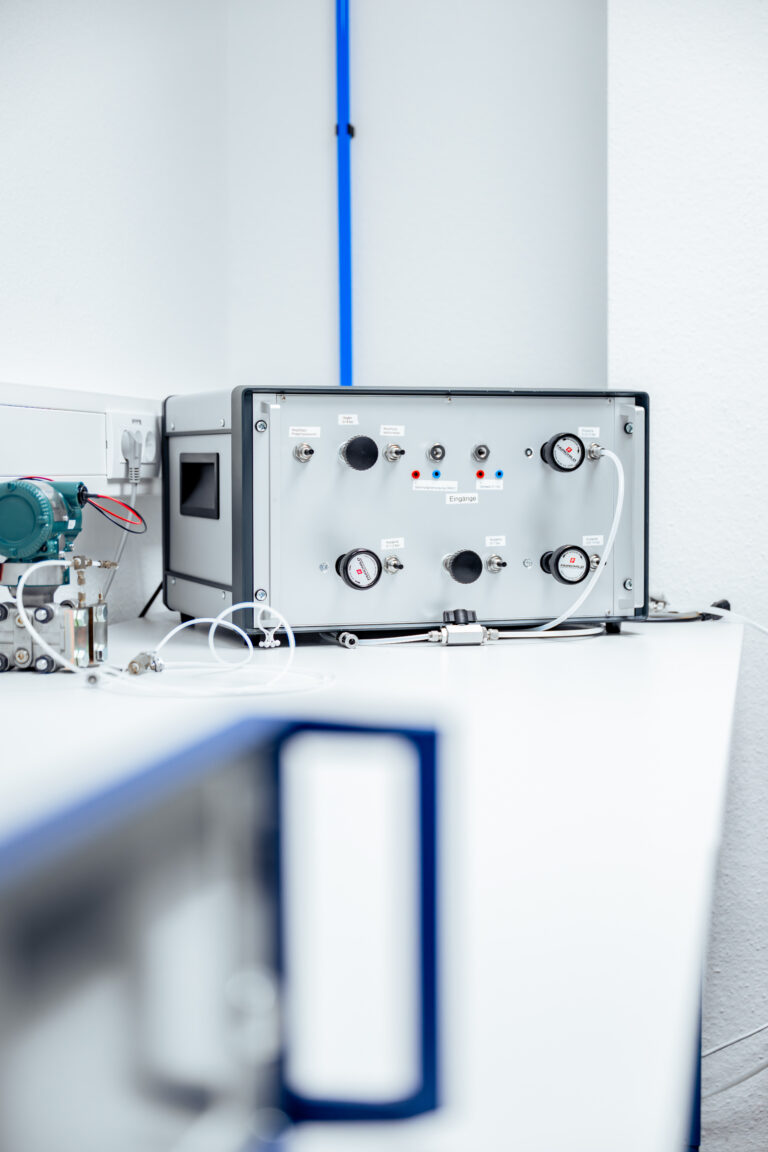
The following section provides an overview of the basics of leak testing as well as the various methods used in industrial manufacturing today.
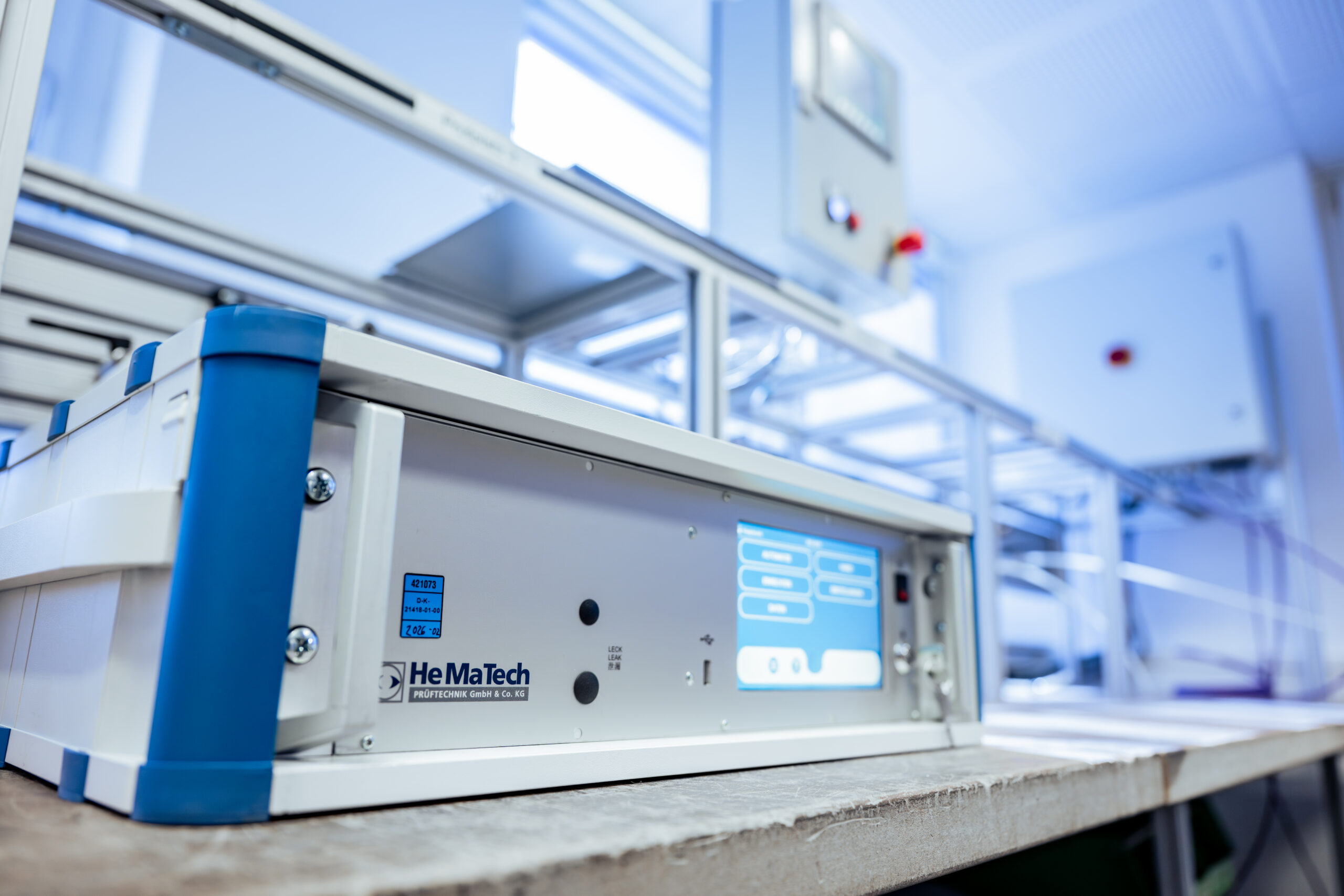
The choice of an appropriate leak testing method depends in particular on:
What is a leak test procedure?
Particularly in the metal and plastics processing industries, numerous hollow components must reliably fulfill their function of separating media.
These include, among others:
Why is the leak test so important?
In mass production in particular, testing methods must not only be precise but also integrate cost-effectively into existing production processes. The goal is to detect defective components early on while avoiding unnecessary rework on flawless workpieces.
Requirements for leak testing vary significantly depending on the industry and application. For this reason, different testing methods are used, each tailored to the specific application.
Fundamentals of Leak Testing
This method meets key requirements for modern production testing equipment:






These include, for example:
This can have two different consequences:
What does "tightness" mean?
Strictly speaking, there is no such thing as an absolutely leak-tight connection, since, for example, diffusion processes can occur through the material. For this reason, a workpiece-specific threshold value is used to assess the leak tightness of a component.
This threshold value is referred to as the leakage limit.
In practice, determining a limit leakage is often challenging, as there is no universally applicable calculation formula for this purpose. Instead, one relies primarily on empirical values from comparable applications.
Depending on the leak test method, application area, or industry, different units of measurement are used. The unit that has become standard in leak testing today is:
1 mbar · l · s⁻¹
It describes the volume of gas that causes a pressure change of one millibar in a volume of one liter within one second.

Why is air used as a test medium?
Conversion of Key Units of Pressure
| Unit | Abbreviation | Explanation |
|---|---|---|
| Pascal | Pa | SI unit ; 1 Pa = 1 N/m² |
| millibar | mbar | metric unit of measurement ; 1 mbar = 100 Pa |
| Bar | cash | metric unit of measurement ; 1 bar = 100,000 Pa |
| Pound-force per square inch | psi | Anglo-American unit of measurement ; 1 psi = 6894.76 Pa |
| millimeters of water column | mmWS | Obsolete unit of measurement ; 1 mmWS = approx. 9.81 Pa |
| millimeters of mercury | mmHG | A unit of measurement commonly used in the medical industry ; 1 mmHG = 133.3 Pa |
| Leak rate | mbar * 1/s | Common unit of measurement for leak rates : 1 mbar*l/s = pressure change from p = 1 mbar within a volume V = 1 L in time t = 1 s |
The Various Leak Testing Methods
Leak Test Procedure Using Overpressure
Leak Test Method Using Negative Pressure (Vacuum Test)
Bubble Method (Bubble Test)
The test setup consists of an immersion tank, a testing fixture, and a pressure regulator. The test specimen is pressurized and then submerged in a water-filled tank. If air bubbles emerge, this indicates a leak.
The bubble method is particularly suitable for simple testing tasks and allows for a visual inspection of any leaks.
Pressure-Rise Method (Relative Pressure Method)
A valve then isolates the test specimen from the pump.
If there is a leak in the workpiece, ambient air can enter. This causes the pressure inside the test specimen to rise. This pressure increase serves as the basis for assessing the tightness.
Relative Pressure Method
Depending on the application, the relative pressure method provides reliable information about the leak tightness of a workpiece.
Differential Pressure Method
The main difference lies in the measurement principle. A system consisting of two chambers separated by a diaphragm serves as the sensor. Movements of this diaphragm are detected and used to determine the differential pressure.
This results in significantly higher measurement accuracy compared to the relative pressure method.
Due to its high cost-effectiveness and measurement accuracy, the differential pressure method has proven particularly effective for the automatic leak testing of mass-produced parts in industry.
Choosing the Right Leak Test Method
These include, in particular:
Finding the Best Solution Together
With extensive experience gained from a wide range of completed projects and a diverse lineup of equipment, we can help you find the right solution for your leak testing needs.
Our equipment lineup includes, among other things:
70pro Leak Tester
Request NowFlow meter 3925-0160
Request NowRelative Pressure Gauge 3925-0071
Request NowLeak Calibrator 3925-0201 / -0202
Request NowOur Conclusion on Leak Testing Procedures
Different testing methods make it possible to reliably inspect components for leaks and ensure the required product quality.
Whether it’s the bubble method, relative pressure method, differential pressure method, flow measurement, or vacuum leak detection—each method has specific characteristics and is suitable for different applications. The choice of the appropriate leak testing method always depends on the technical requirements of the specific workpiece as well as the conditions of the testing process.
We would be happy to assist you in selecting the appropriate testing technology and work with you to develop a cost-effective and reliable solution for your leak testing needs.
Submit a Request Now
HeMaTech Prüftechnik GmbH & Co. KG
Siemensstr. 7
D-71409 Schwaikheim
Frequently Asked Questions
What is a leak test procedure?
A leak test procedure is used to check components for possible leaks. The goal is to ensure that workpieces reliably fulfill their intended function and meet the required specifications.
What leak testing methods are available?
A general distinction is made between leak testing methods that use overpressure and those that use underpressure or a vacuum. Well-known methods include, among others, the bubble method, the relative pressure method , the differential pressure method, pneumatic flow systems, and vacuum leak detection.
What does "boundary leakage" mean?
Since absolute leak-tightness does not exist in practice, a permissible limit value is defined for each workpiece. This is referred to as the leakage limit and serves as a criterion for assessing leak-tightness.
Why is compressed air often used for leak testing?
The air leak test is based on the low viscosity of the test medium. This makes it possible to reliably detect even the smallest leaks. At the same time, the test specimen remains free of impurities, since the test medium does not cause contamination.
How do positive-pressure and negative-pressure methods differ?
The difference lies in the pressure inside the test specimen. In a pressure test, the pressure is higher than atmospheric pressure; in a vacuum test, it is lower.
Which leak test method is the right one?
The selection depends on the workpiece, the permissible leakage rate, the required measurement accuracy, and the economic requirements of the respective testing process.