
Leak Testing Technology
Leak Testing Technology from HeMaTech
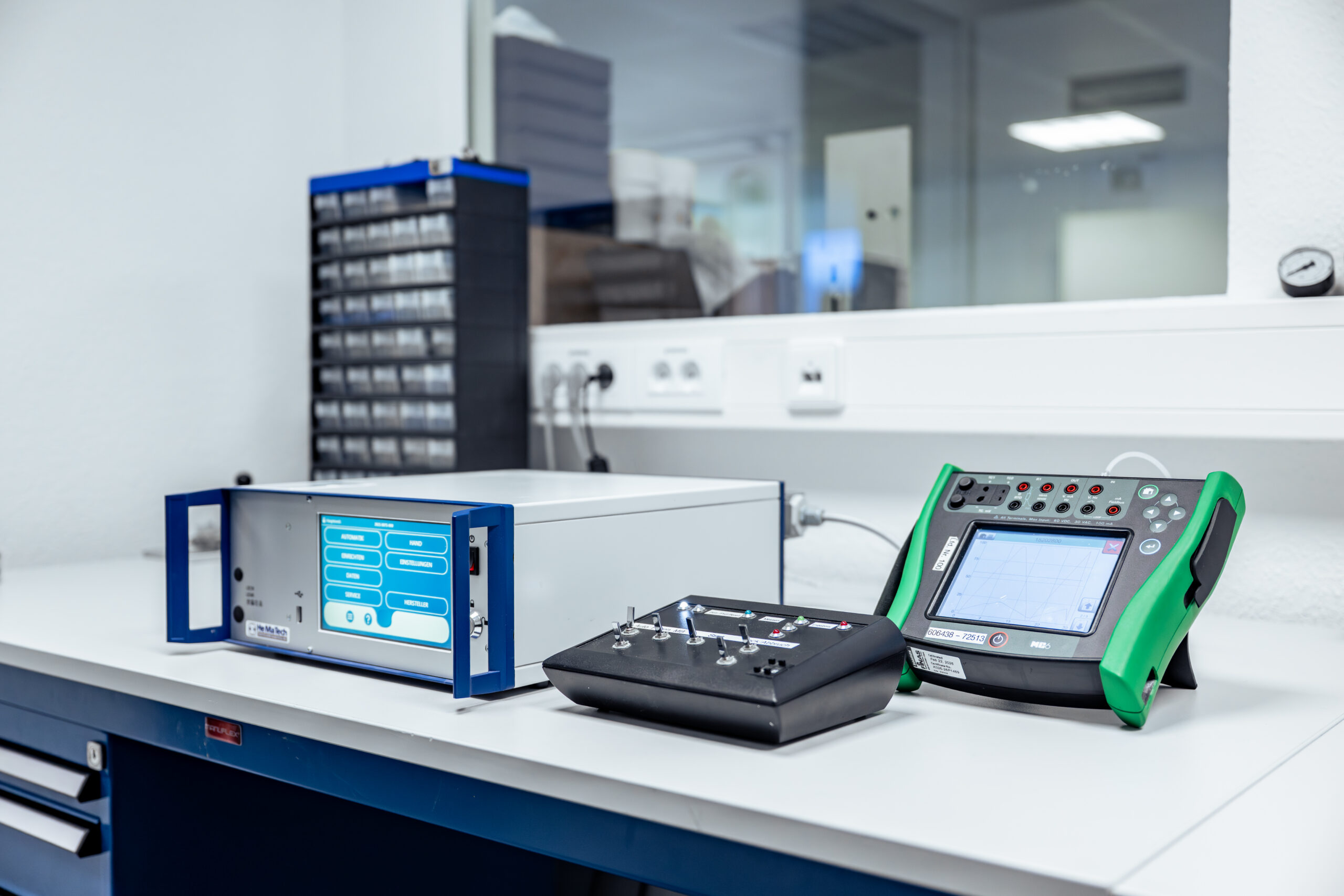
A professional leak test makes such leaks measurable. Modern leak testers enable reproducible tests and can be used both at manual test stations and in automated production lines.
However, the tester alone is not the decisive factor. Meaningful results arise from the interplay of leak testing technology, test procedures, test fixtures, adaptation, process parameters, and calibration.
HeMaTech Prüftechnik GmbH focuses precisely on this interplay. Its services range from leak testers and accessories to calibration and service, all the way to the development of custom test stations and automated test systems.
What is a leak test?
Depending on the test method, a change in pressure or a volume flow rate, for example, is measured.
Unlike a purely visual inspection, metrological leak testing provides quantitative and reproducible results.
The decisive factor, therefore, is the permissible leak rate for the specific application.
The requirements vary considerably. A component that is sufficiently leak-tight for one application may fall significantly short of the requirements for another process.
Before selecting a test method, the following points, among others, must therefore be clarified:
Reproducible test conditions are particularly important in mass production. The results should depend as little as possible on the operator or on changing environmental conditions.
This is precisely where automated leak testing technology offers a significant advantage.
How does a leak tester work?
The basic test procedure can be divided into several phases.
After filling, a stabilization phase may be required. The pressure and temperature must stabilize sufficiently to prevent incorrect measurement results.
Then the actual measurement phase begins.
The leak tester now monitors, for example, a change in pressure or a pressure differential. If the measured value exceeds the specified limit, the component is evaluated accordingly.
The entire measurement chain must be taken into account.
Test equipment → Connection technology → Test fixture →
Sealing → Test specimen → Process parameters
An unsuitable seal, unstable adaptation, or an inappropriately selected test volume can influence the result.
In industrial leak testing technology, therefore, one should not focus exclusively on the measurement accuracy of the device. The design of the entire test process is at least as important.
What types of leak testing methods are there?
Which method is appropriate depends, among other things, on the component, the permissible leak rate, the test pressure, the cycle time, and the required sensitivity.
Pressure Drop Test
Differential pressure testing
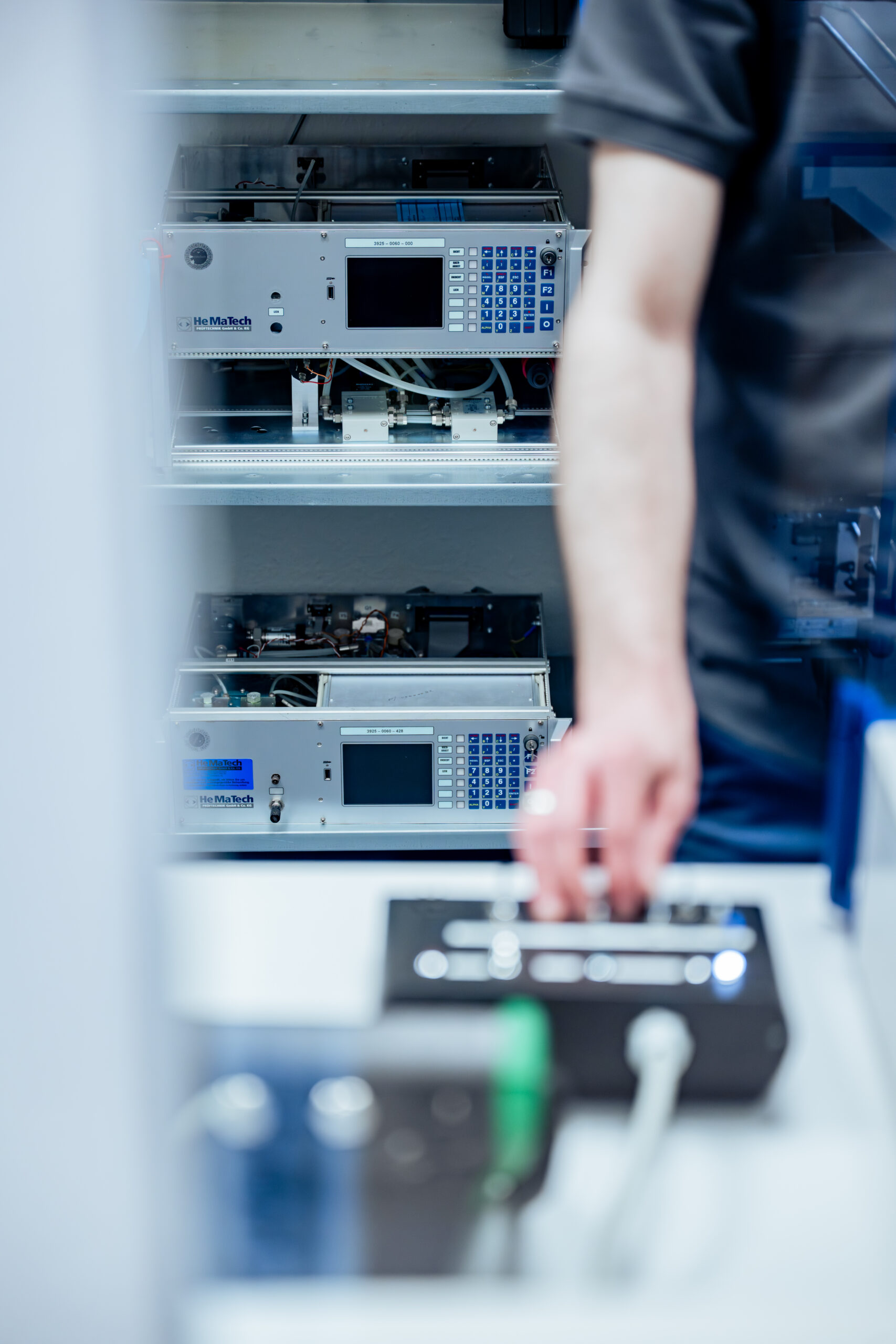
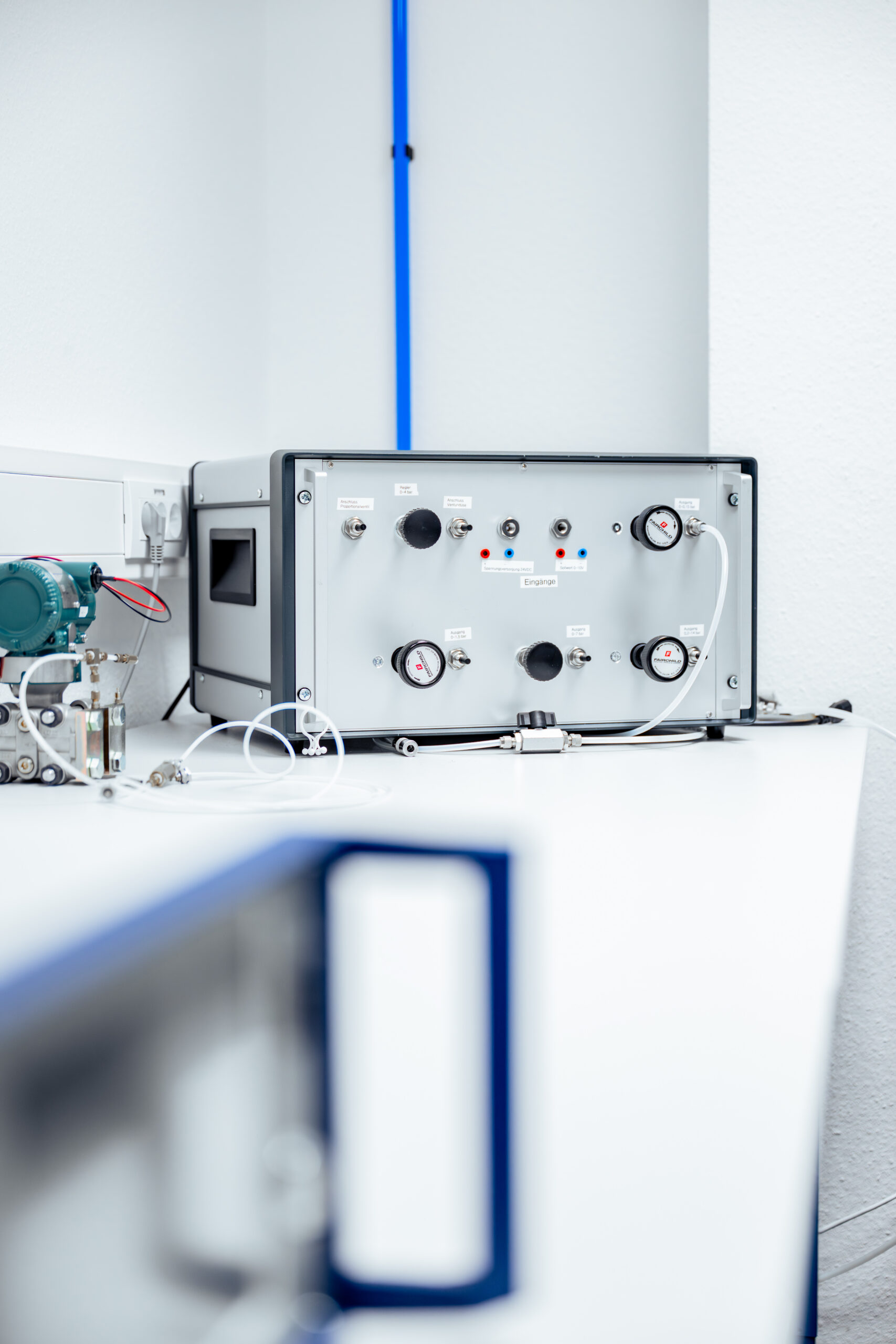
This method does not rely solely on absolute pressure. Instead, the measurement technology detects very small pressure differentials within the test system.
This enables a highly sensitive assessment of leaks and is particularly well-suited for reproducible test sequences in manufacturing.
Flow-Based Testing Methods
Such methods can be particularly useful when a leak needs to be evaluated directly as a flow rate.
The choice between pressure, differential pressure, and flow measurement methods should therefore always be based on the specific testing task.
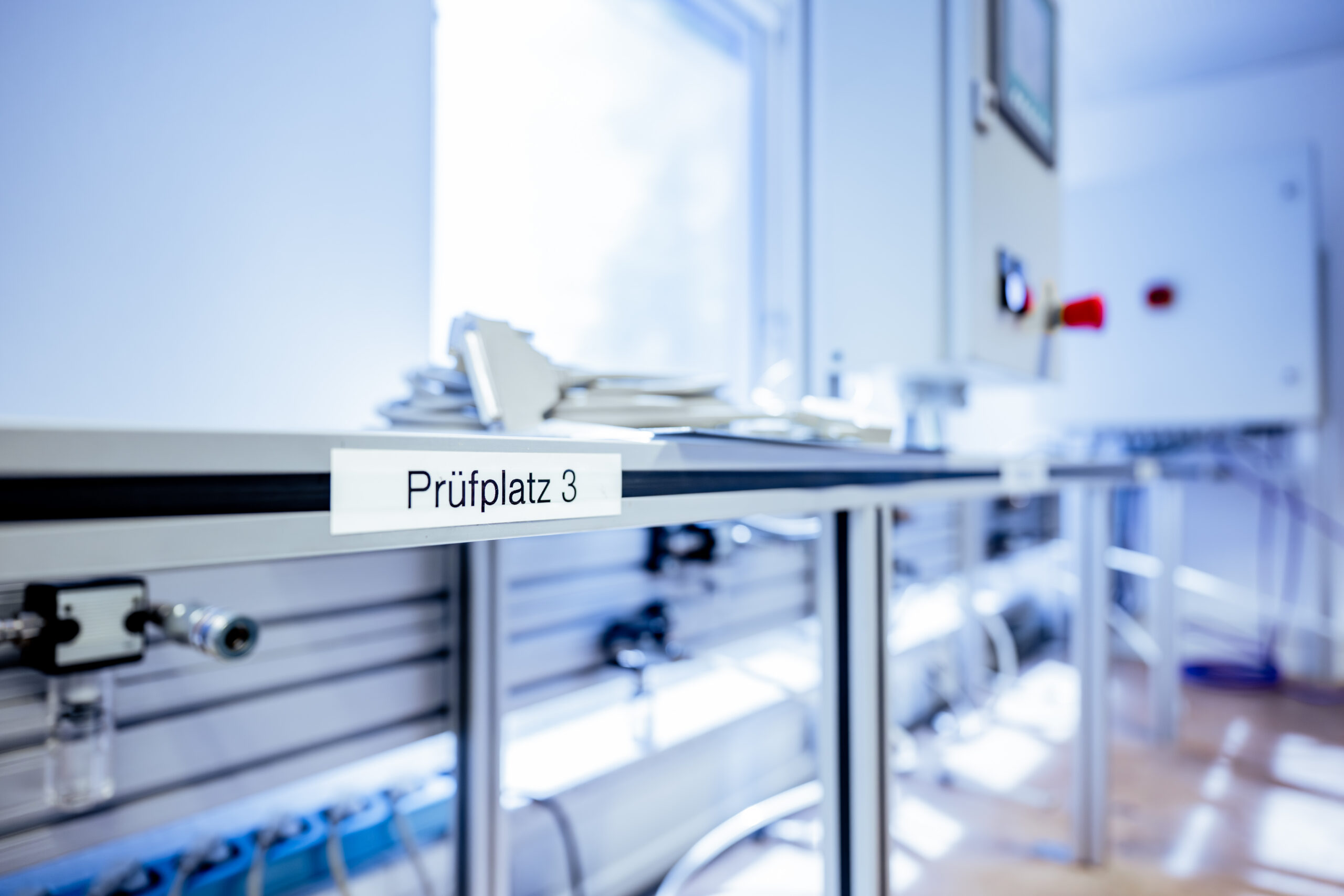
Why Use Compressed Air for Leak Testing?
A key advantage is that testing can be performed dry and, as a rule, non-destructively. No liquid test medium remains in the component after the testing process.
This facilitates integration into production processes.
At the same time, automated processes with short test cycles are possible. Filling, stabilizing, measuring, evaluating, and venting can all be performed within a defined test program.
However, the actual cycle time depends heavily on the test volume, the required test pressure, the required measurement accuracy, and the component’s behavior.
What must an industrial leak tester be capable of?
For industrial users, the most important factor is whether the device can be reliably integrated into the intended testing process.
At the same time, measurement accuracy should always be considered in the context of the actual test task. Higher theoretical resolution does not automatically offer an advantage if, for example, temperature changes, unsuitable fixtures, or fluctuating test conditions dominate the result.
The storage and transmission of measurement results are also becoming increasingly important.
This allows test results to be documented, evaluated, and, if necessary, assigned to a component or production order.
Depending on the application, this may include digital inputs and outputs as well as industrial communication interfaces.
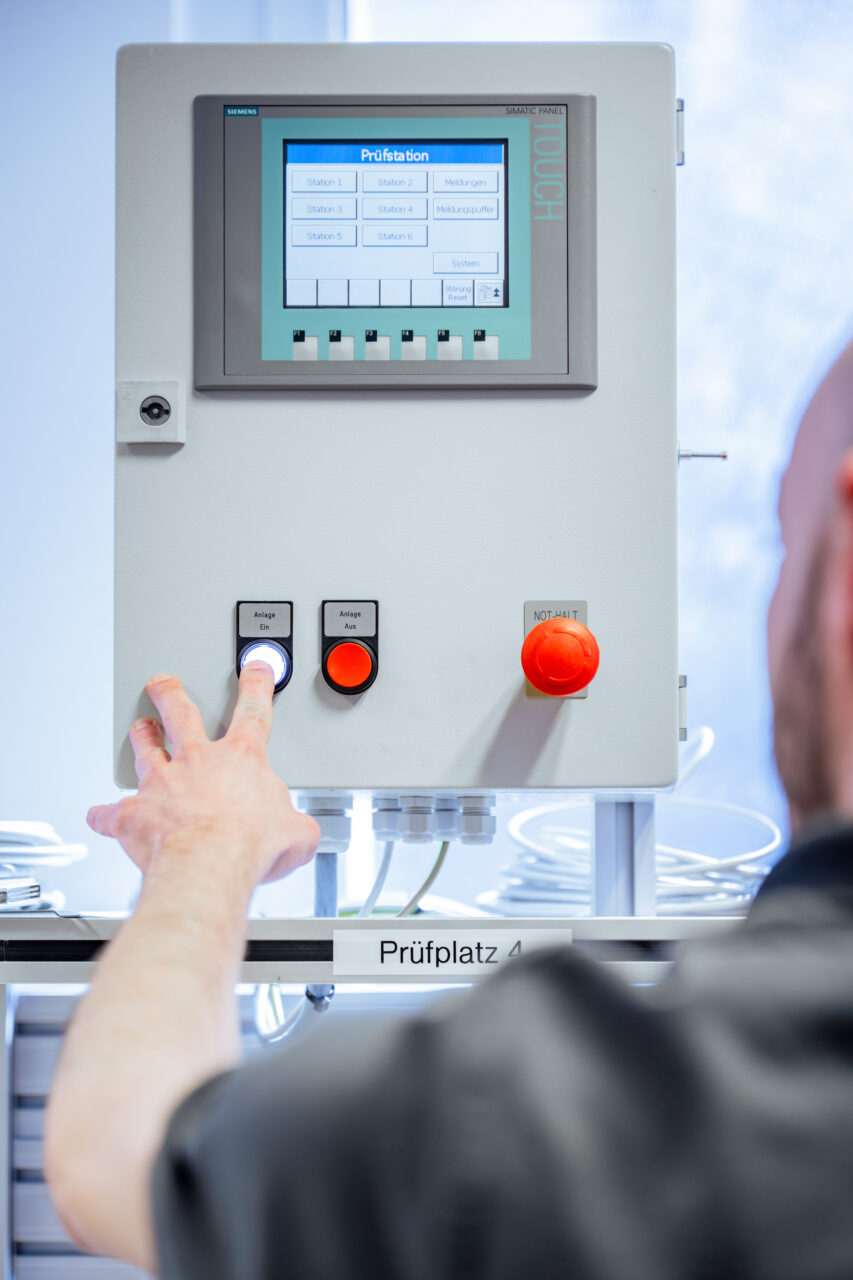
The tester thus becomes an integral part of a larger automation concept: feeding the component, clamping it, adapting it, testing it, transmitting the result, and then processing it further depending on the result.
Leak Testing Technology in Automated Production Processes
This is precisely where a key difference between a pure equipment supplier and a provider of industrial testing technology becomes apparent.
Connections must be reliably sealed or connected to the testing system. At the same time, the fixture should be designed to be robust for industrial use and as easy to maintain as possible.
The development of such fixtures therefore requires both expertise in leak testing and experience in mechanical and plant engineering.
For users, this approach offers a decisive advantage: the test equipment and automation do not have to be considered in isolation from one another.
Instead, the entire testing process—from the test specimen through the measurement technology and adaptation to the control system and data transfer—can be designed as a complete system.
Calibration of Leak Testers
Regular inspection and calibration of leak testing equipment play an important role in this.
Therefore, it must be possible to trace how the values displayed by the test equipment relate to reference values.
Calibration provides a documented basis for this. There is no one-size-fits-all rule for how often calibration should be performed.
The interval depends, among other things, on usage, quality requirements, internal guidelines, and the criticality of the testing process.
Predefined test leaks or leak calibrators make it possible to introduce known leaks into a test setup.
This allows you to verify whether the system responds as expected.
This increases process reliability and helps detect changes early on.
Leak Testing with HeMaTech Testing Technology
HeMaTech Prüftechnik GmbH therefore takes an approach that goes beyond the individual testing device.
The company offers leak testers for a variety of industrial testing tasks and combines them with customer-specific testing technology and automation.
Its range of services includes, among other things:
This allows for a holistic approach to leak testing—from selecting the appropriate measurement method, through test equipment and setups, to automation, calibration, and service.
For technical decision-makers, it is precisely this comprehensive view that is important. After all, what ultimately matters is not just a precise measuring instrument, but a stable, reproducible, and cost-effective testing process.
The Right Testing Technology for Reliable Leak Tests
A reliable leak test cannot be achieved by the testing device alone. Measurement methods, test parameters, equipment, adaptation, automation, and calibration must all be coordinated.
That is why, especially in automated production processes, it is worthwhile to take a holistic approach to the inspection task.
The HeMaTech Prüftechnik GmbH combines leak testing equipment and measurement technology with calibration expertise, fixture design, and automation. This enables the company to implement both individual testing tasks and complete industrial leak testing systems.
Anyone looking to optimize an existing leak test or find a suitable leak test device , or develop a new automated testing process should therefore take the entire measurement and process chain into account right from the planning stage.
Submit a Request Now
Contact us—we’d be happy to advise you personally.
HeMaTech Prüftechnik GmbH & Co. KG
Siemensstr. 7
D-71409 Schwaikheim
Frequently Asked Questions About Leak Testing
What is a leak tester?
A leak tester is a measurement system used to detect and evaluate leaks in components or assemblies. Depending on the method used, measurements may include, for example, changes in pressure, pressure differentials, or flow rates.
How does a compressed-air leak test work?
A defined air pressure is applied to the test specimen. After a stabilization phase, the testing device monitors a relevant measurement parameter. Based on defined limit values, an assessment is then made as to whether the test specimen meets the leak-tightness requirements.
What leak testing methods are available?
Methods used in industry include, among others, pressure drop, pressure rise, differential pressure, and flow rate methods. In addition, there are other methods designed for specific requirements. The appropriate method depends on the specific test task.
What is a differential pressure test?
During a differential pressure test, very small pressure differences within a test system are measured. This allows one to determine whether a leak is present and, if so, its extent.
How accurate is a leak tester?
The achievable accuracy depends on the device and measurement method used, as well as on the test pressure, volume, temperature, measurement time, and test setup. Therefore, accuracy should always be evaluated for the specific application.
How often should a leak tester be calibrated?
There is no universally applicable calibration interval. It should be determined based on usage, the required process reliability, the company’s own quality standards, and, where applicable, regulatory or customer-specific requirements.