For industrial manufacturing processes

Assembly Automation

We develop assembly automation systems with stable, repeatable processes and comprehensive technical documentation—from design through commissioning.
To our 3D models
Cost-Effective Automation of Assembly Processes

Series production and special-purpose machinery

Assembly processes often consist of many individual steps with varying requirements for positioning, joining techniques, and cycle time. In industrial manufacturing, these processes must operate in a stable, traceable, and consistently reproducible manner.
That is exactly why we develop customized assembly automation solutions for industrial applications.
Our systems are designed for, among other things:
Automotive
Mechanical Engineering
Plastics Technology
Medical Technology
Energy & Drive Technology
Industrial Series Production
Depending on the application, we implement:
manual assembly stations
semi-automatic assembly lines
Fully automated assembly cells
linked assembly systems
Robotic Cells for Assembly Processes
In doing so, we take into account not only the actual assembly process, but also workpiece handling, material flow, cycle time, and integration into existing production lines.
Integrate Joining Processes Safely

Joining Technology and Industrial Assembly

Many assembly processes require precisely coordinated motion sequences and defined process forces. That is why we develop assembly systems tailored to the workpiece, joining method, and production environment.

Our assembly automation can be fully integrated into existing manufacturing processes—including workpiece handling, robot loading, and process monitoring.
Depending on the application, this results in individual workstations or fully automated assembly cells with multiple process stations.
Methods used include, among others:
Developing Placement Systems for Reliable Operations

Industrial Series Production

An assembly line must ensure consistently stable operations—even with high production volumes, short cycle times, or varying component types. That is why we do not develop automated assembly systems as off-the-shelf solutions, but rather tailor them to the specific production task.
Our assembly lines can integrate the following processes, among others:
In addition, we integrate:
Workpiece carrier systems
Robotic handling
Feeding technology
Vision systems
Process data acquisition
HMI and visualization systems
This results in assembly processes that can be reliably integrated into industrial manufacturing workflows.
Using Robotics in Assembly Processes

Robotic Cells and Automation for Assembly Lines

Complex assembly processes often require automated motion sequences and precise workpiece positioning. That is why we combine assembly automation with robotics and automated handling systems.
For example, our robot cells handle:
Loading and Unloading of Assembly Lines
Workpiece positioning
automated joining processes
Component handling
Process Specifications
Chaining Multiple Assembly Stations
In doing so, we integrate servo-electric axes, sensors, camera systems, and PLC controls into a complete automation solution.
Many systems are designed specifically for high cycle rates or complex assemblies where manual assembly processes reach their economic or technical limits.

Adapting Assembly Automation to Real-World Production Conditions

Custom Assembly Automation

Every manufacturing operation has different requirements for assembly processes, workpiece handling, and equipment configuration. That is why we develop custom-built special-purpose machines for industrial assembly tasks.
We do not produce universal, off-the-shelf machines, but rather technical solutions tailored to specific manufacturing conditions and production processes.
Our services in special-purpose machine building include:
Technical engineering and project planning
Concept Development
Design and Engineering
Electrical Planning
PLC Programming
Assembly
Commissioning
Upgrading Existing Systems
Storage, Palletizing, and Workpiece Handling

Project Examples for Assembly Systems

Many of our placement systems are designed for applications with high demands on cycle time, process stability, and workpiece handling.
The examples and models shown provide insight into the design, workpiece guidance, and technical processes of our feeding technology:

Assembly line for inserting inserts into axle components

Show DetailsView 3D Model

Assembly and Testing Machine for a Sub-Assembly of a Passenger Car Steering System

View Details

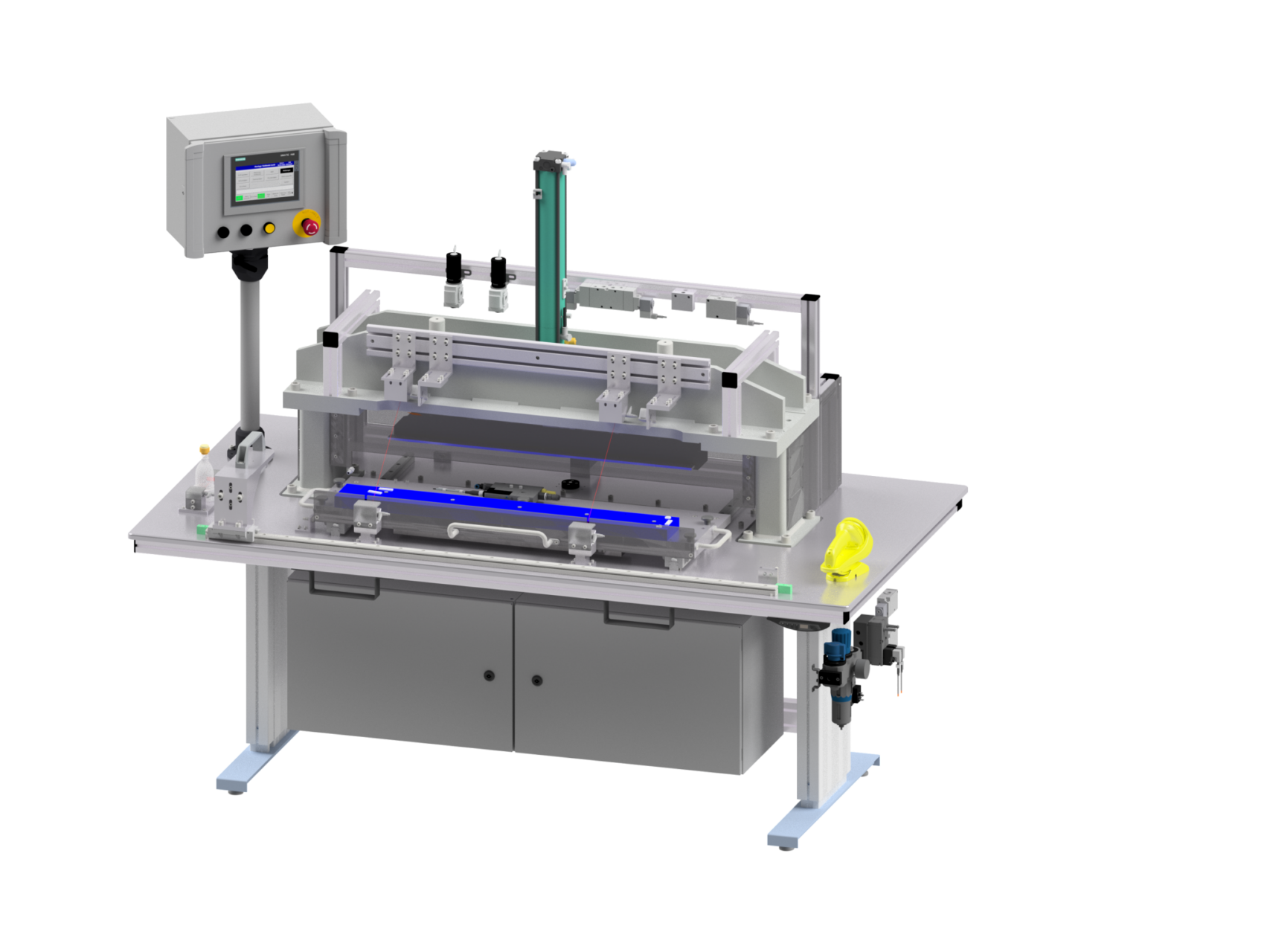
Assembly Station for Door Panels

Show DetailsView 3D Model
Ensuring Quality in Assembly Processes

Quality Management

Assembly automation must ensure consistently reproducible processes. That is why, even during the development phase, we focus on stable processes, consistent cycle times, traceable process data, and maintenance-friendly system designs.

This is complemented by operating and safety concepts, as well as technical documentation for long-term use. Even after commissioning, we continue to support our customers with technical assistance, system adjustments, and upgrades to existing assembly systems.
Documenting Technical Standards

Certifications and Requirements

Depending on the industry and production environment, different requirements apply to assembly processes, documentation, and technical traceability.
We provide additional technical documentation and project-specific documentation based on the application and system design.
ISO 9001:2015 Certificate
Our experience includes, among others:
Planning Assembly Processes Together

get in touch

Are you looking to automate assembly processes, expand existing assembly lines, or develop a custom assembly automation solution for your production?
Then talk to us about your requirements. Together, we’ll analyze the workpiece, the process flow, the cycle time, and the production environment—from individual assembly workstations to fully automated assembly cells.
Request a project now
Frequently Asked Questions About Assembly Automation

FAQ on Assembly Lines, Robotic Cells, and Assembly Automation

Assembly line for inserting inserts into axle components

  • Fully automatic joining system with integrated pull-test
  • Integrated into a robotic cell
  • Feeding, supplying, and separating inserts
  • Workpieces on a servo-electric traverse slide
  • Servo-electric joining spindle with force-displacement monitoring on a sturdy welded steel structure
  • Integrated cartridge testing with automatic screw-in unit

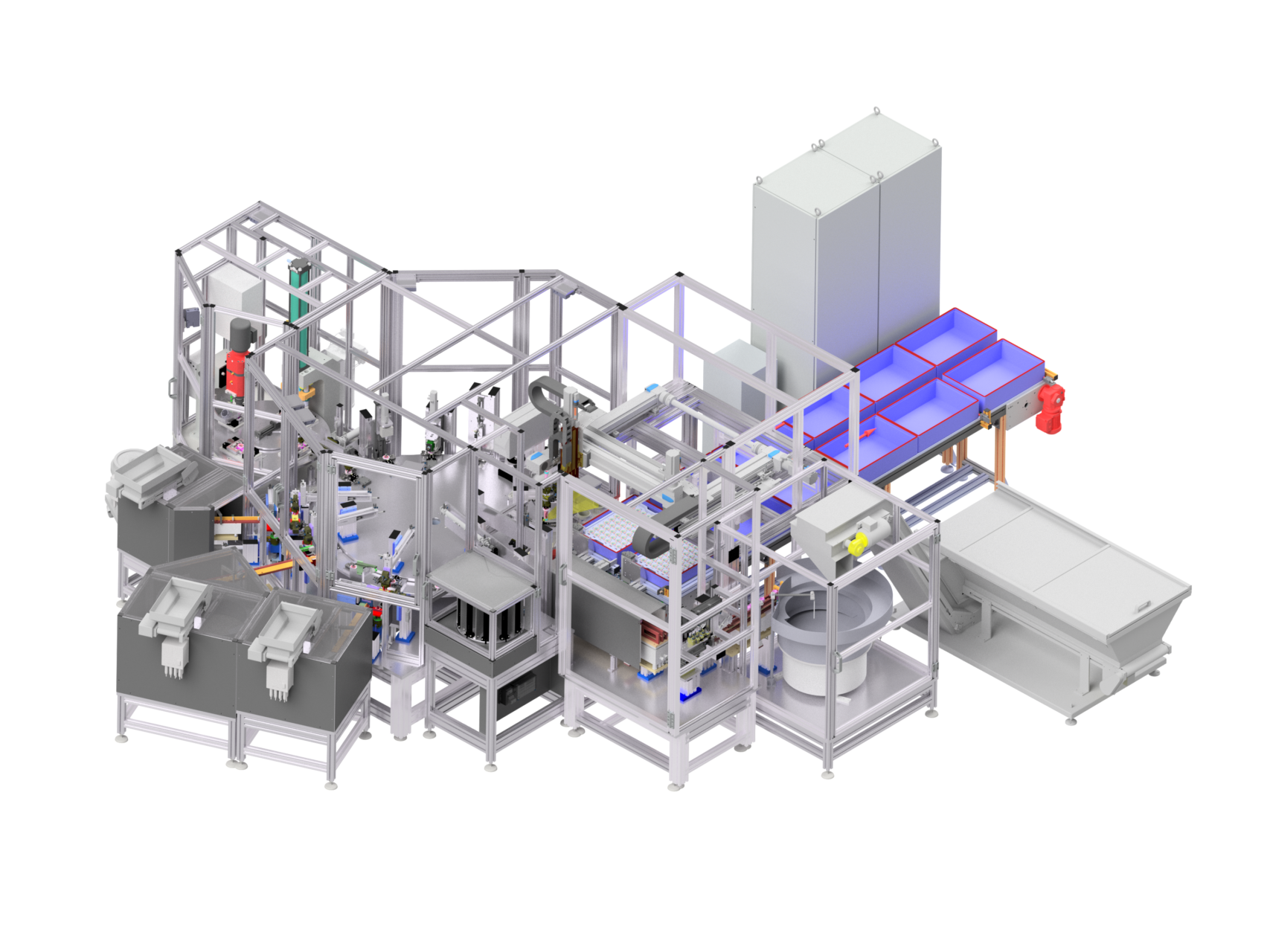
Assembly and Testing Machine for a Sub-Assembly of a Passenger Car Steering System

  • Double-turret machine with 16+4 stations and two rotary tables
  • Component Feeding via Hoppers and Conveyor Systems
  • Assembly of the five-part subassembly
  • Transferring the pre-assembled subassembly to the auxiliary rotary table
  • Pre-flanging the support component
  • Tapered rivets on the support component
  • Placing the fully assembled subassembly onto the main rotary table
  • Measuring a height
  • Torque Measurement of the Bearing Assembly
  • Laser Marking with DMC
  • Proofreading the DMC
  • Fully automatic dispensing and unloading into blisters with tray inserts

Assembly Station for Door Panels

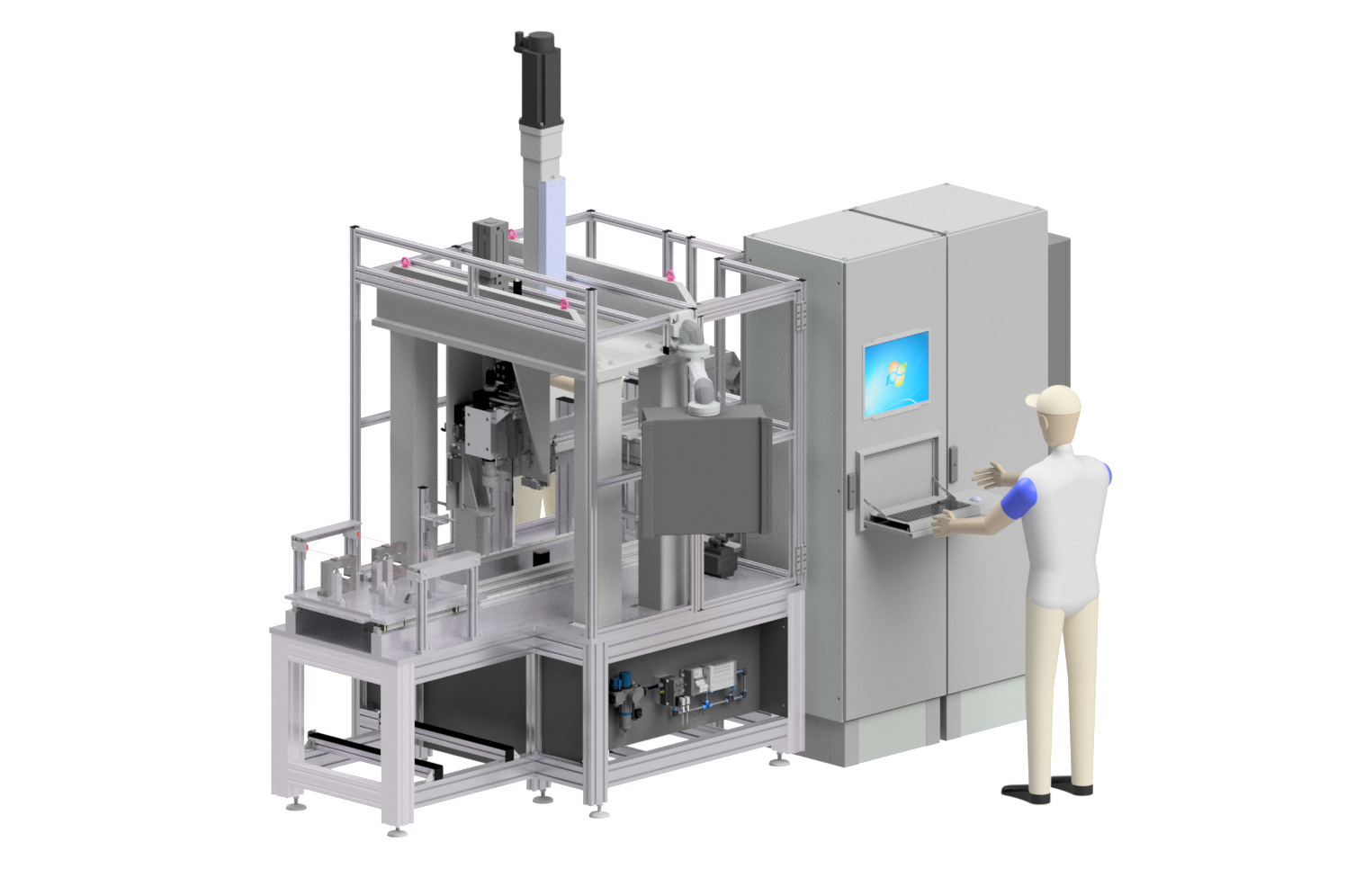
  • Semi-automatic assembly station for door panels
  • Graphical User Interface
  • Hand-held roller for pressing down the adhesive pads
  • All manual operations are monitored by sensors
  • Pneumatic-hydraulic cylinder for pressing the adhesive pads with a specified force
10695 - HeMaTech Prüftechnik GmbH & Co. KG - Download