
Differential pressure testing
Precise Leak Testing for Industrial Applications
Compared to other testing methods, differential pressure testing offers very high measurement accuracy and minimizes the influence of external factors such as temperature fluctuations. This makes it suitable for numerous industrial applications and allows it to be easily integrated into automated manufacturing processes. The following content is based on the technical description of the method provided.
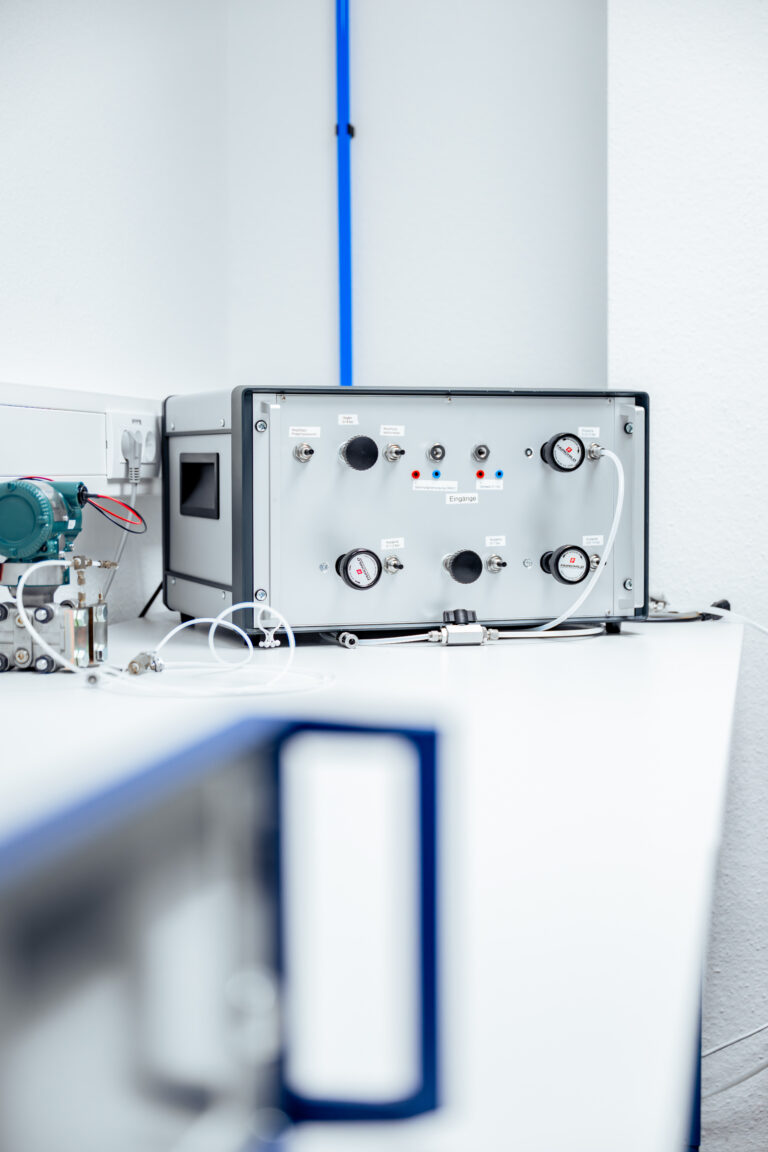
What is a differential pressure test?
During the measurement, even the smallest pressure differences are detected. If air escapes from the test specimen due to a leak, a differential pressure develops between the test specimen and the reference volume. This pressure difference is measured and used to assess the tightness of the specimen.
The method is particularly suitable for applications with higher requirements for measurement accuracy and is frequently used in industrial quality testing.
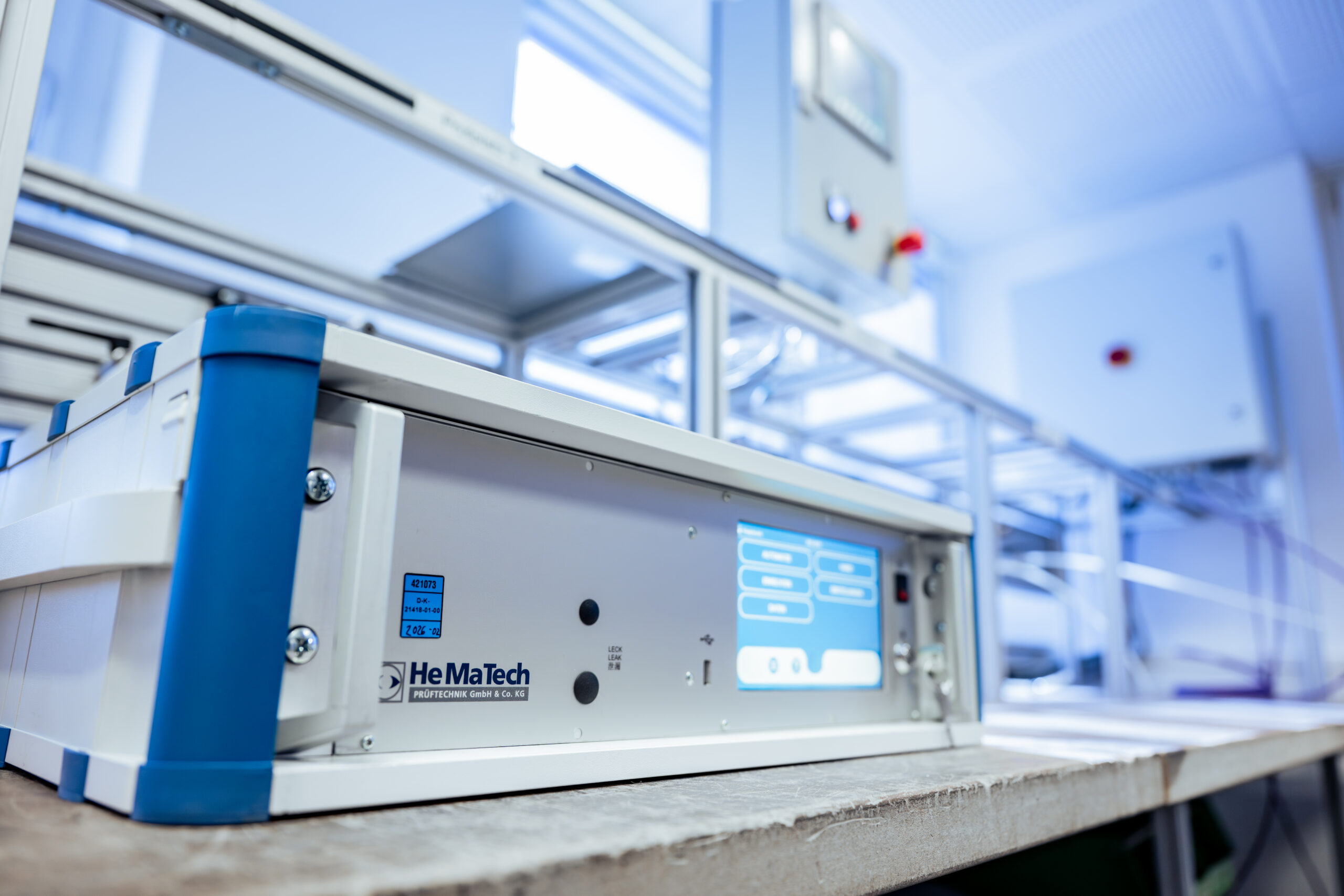
How does differential pressure measurement work?
Depending on the application, the following can be used for this purpose:
To ensure reliable measurement results, both the measurement system and the test fixture itself must be leak-tight. Only under identical test conditions can the smallest pressure differences be unequivocally attributed to a leak in the test specimen.
Procedure for a Differential Pressure Test
1. Filling Phase
Both volumes reach the same test pressure. At the same time, the differential pressure sensor is protected from excessive pressure loads.
2. Stabilization Phase
During this time, the pressure and temperature within the system can stabilize. The goal is to create uniform initial conditions for the actual measurement and to minimize the influence of physical disturbances as much as possible.
3. Measurement Phase
If, on the other hand, there is a leak, the pressure in the test specimen changes. The resulting differential pressure is recorded and evaluated by the measurement system. In this way, even very small leaks can be reliably detected.
4. Venting
The next test cycle can then be started.
Measurement Procedures for Differential Pressure Testing
Measurement Using a Pressure Sensor
Measurement Using Two Pressure Sensors
Measurement Using a Differential Pressure Sensor
In this design, two chambers are separated from each other by a diaphragm. Even the smallest pressure differences cause the diaphragm to move, allowing for highly precise measurements.
This measuring principle forms the basis of modern differential pressure testers.
The Hood and Bell Method
Depending on the test requirements, the test is performed using either an overpressure or a vacuum method. The measurement principle is also based on comparing pressure ratios and enables a reliable assessment of leak tightness.
Advantages of Differential Pressure Testing
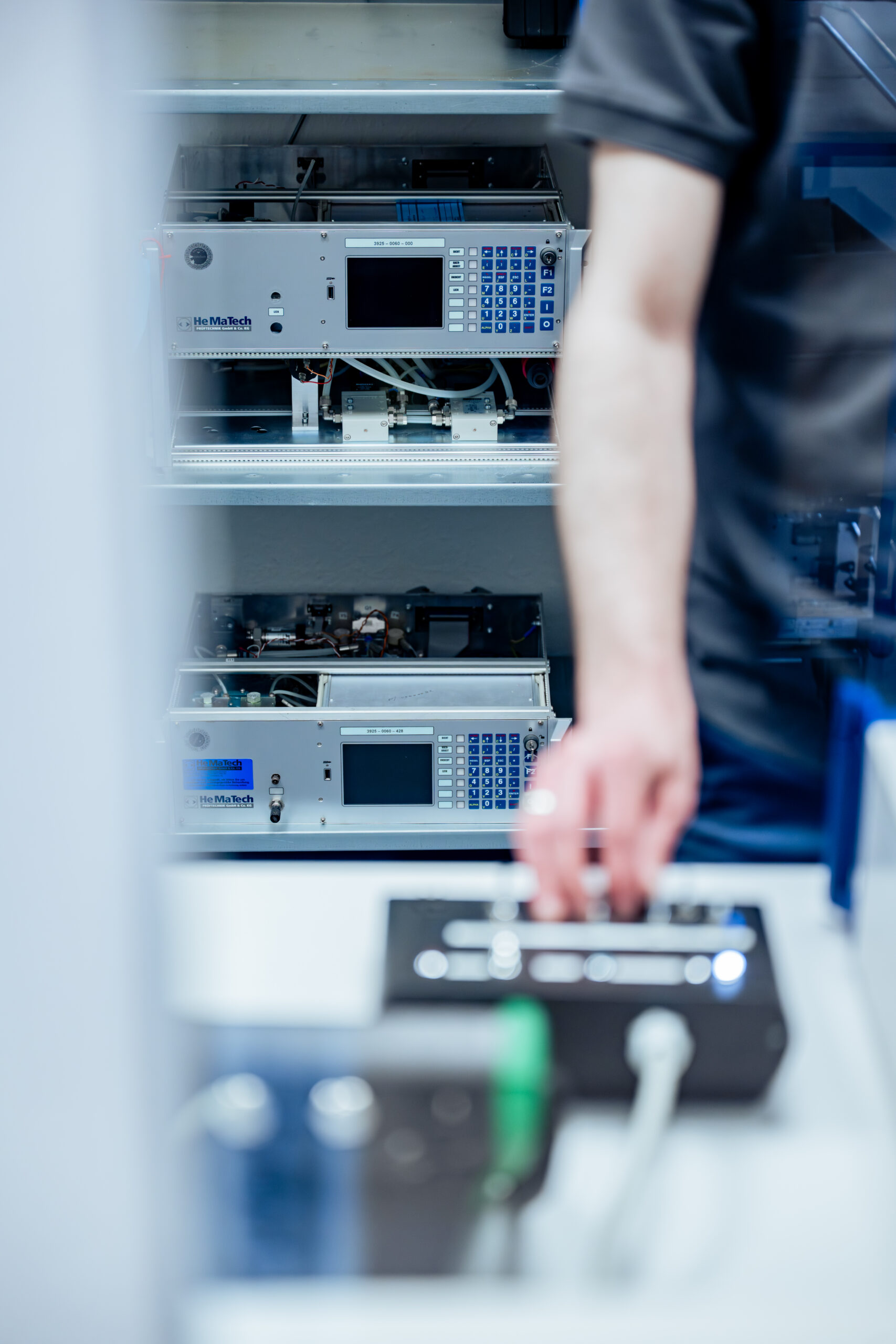
Typical Applications
The specific test method used in each case depends on factors such as component geometry, test volume, permissible leakage, and the requirements of the test process.
Why HeMaTech?
Its range of services includes, among other things:
Leak Testing Instruments
Learn MoreLeak Testing Systems
Learn MoreFlow Measurement Technology
Learn MoreIntegration into automated production lines
Learn MoreAdvice on Selecting the Appropriate Test Method
Learn MoreThe Right Solution for Your Leak Test
Do you have questions about differential pressure testing, or wouldyoulike to reliably test your components for leaks?
Contact us—we’d be happy to advise you personally.
HeMaTech Prüftechnik GmbH & Co. KG
Siemensstr. 7
D-71409 Schwaikheim
Frequently Asked Questions
What is a differential pressure test?
A differential pressure test is a leak testing method in which the pressure in the test specimen is compared to that in a reference volume in order to reliably detect leaks.
When is a differential pressure test used?
This method is particularly well-suited for industrial applications with high requirements for measurement accuracy, reproducibility, and process reliability.
What are the advantages of differential pressure testing?
Among the most important advantages are high measurement accuracy, minimal temperature effects, reproducible results, and suitability for automated batch testing.
What is a reference volume?
The reference volume serves as a reference volume during the measurement. It can be designed as an internal reference vessel or as a reference block and improves the accuracy of the differential pressure measurement.
For which components is this process suitable?
Differential pressure testing is used for valves, housings, piping, plastic components, and other hollow bodies, among other things.